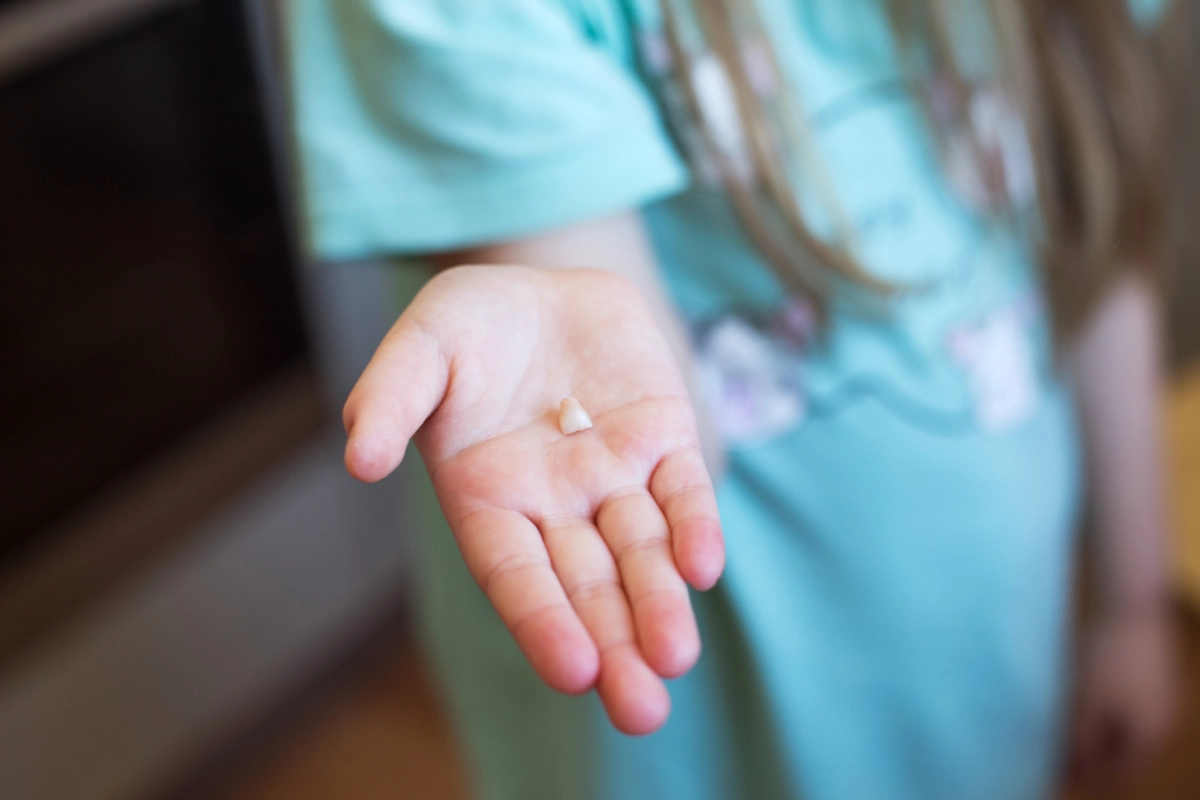
Your baby’s first tooth is a big moment. So is the first one that falls out, usually around age six, and, for some reason, usually at dinner. In between there’s teething, there’s wobbling, and there are a lot of “is this normal?” questions.
Here’s the timeline we walk Dallas parents through at checkups, with charts for both sets of teeth and some straight answers about loose ones.
How Many Baby Teeth Do Kids Have?
Children typically have 20 baby teeth, with 10 in the upper jaw and 10 in the lower jaw. Most children have all their primary teeth by the age of three, although they may come in earlier or later. As children grow, these teeth gradually fall out and are replaced by permanent teeth. Most adults have up to 32 permanent teeth, including wisdom teeth.
Baby Teeth Chart: When Each Tooth Comes In
| Tooth | Upper | Lower |
|---|---|---|
| Central incisors | 8–12 months | 6–10 months |
| Lateral incisors | 9–13 months | 10–16 months |
| Canines | 16–22 months | 17–23 months |
| First molars | 13–19 months | 14–18 months |
| Second molars | 25–33 months | 23–31 months |
Source: American Dental Association tooth eruption chart.
The bottom front teeth usually appear first, around six months. Molars come later, and they’re the ones that make teething miserable because they’re wide and push through more gum. A few months either side of the chart is fine. If there’s still no tooth by 18 months, mention it at your next visit.
Don’t wait for a mouthful of teeth to book that first appointment, either. The American Academy of Pediatric Dentistry recommends a first visit by age one. Our first visit tips explain what happens.
When Do Kids Start Losing Teeth?
Usually around six. Some children start at five, while others hold out until seven. Girls often lose their first teeth a little earlier than boys. If you’re wondering when do kids lose teeth, the process generally follows the order in which their baby teeth first appeared. The bottom front two are usually the first to go, while the last baby molars typically fall out between ages 10 and 12.
| Baby tooth | Usually falls out |
|---|---|
| Central incisors | 6–7 years |
| Lateral incisors | 7–8 years |
| First molars | 9–11 years |
| Canines | 9–12 years |
| Second molars | 10–12 years |
Losing teeth before four is worth a check. Early loss can come from decay or an injury, and a missing baby molar lets the teeth beside it drift into the gap. That’s what space maintainers are for.
Permanent Teeth Chart
| Permanent tooth | Upper | Lower |
|---|---|---|
| Central incisors | 7–8 years | 6–7 years |
| Lateral incisors | 8–9 years | 7–8 years |
| Canines | 11–12 years | 9–10 years |
| First premolars | 10–11 years | 10–12 years |
| Second premolars | 10–12 years | 11–12 years |
| First molars | 6–7 years | 6–7 years |
| Second molars | 12–13 years | 11–13 years |
| Third molars (wisdom teeth) | 17–21 years | 17–21 years |
One thing that surprises parents: the first permanent molars, often called six-year molars, don’t replace anything. They come in behind the last baby molars, so there’s no wiggly tooth to warn you. They’re also the teeth most likely to get a cavity in the first few years, which is why we often suggest dental sealants once they’re through.
New front teeth can look a bit yellow next to the baby teeth, with little bumps along the biting edge. Both are normal. Permanent teeth have more dentin under the enamel, so they look darker, and those ridges (called mamelons) wear down with chewing.
How to Pull a Baby Tooth Safely
When a baby tooth becomes loose, it’s natural for parents to wonder how to pull a baby tooth without hurting their child. In most cases, there’s no need to rush the process. Encourage your child to gently wiggle the tooth with a clean finger or tongue and let it fall out on its own when it’s ready. Avoid pulling or twisting a tooth that is still firmly attached, as this can cause pain or bleeding. If the tooth is causing discomfort, appears stuck, or isn’t falling out as expected, a visit to Just Kids Dental can help determine the next steps.
What Are “Shark Teeth”?
Sometimes the bottom front permanent teeth come in behind the baby teeth instead of pushing them out, and your child has a double row for a while. It looks alarming. It’s also very common. Usually the baby teeth loosen on their own within a couple of months, and the tongue nudges the new ones forward. If the baby teeth still aren’t budging after two or three months, book a visit. Taking them out is quick.
When To Call The Dentist
- No teeth at all by 18 months
- Losing baby teeth before age four
- A tooth knocked out or loosened in a fall. See our emergency dental care page.
- Shark teeth that haven’t sorted themselves out after a few months
- A baby tooth turning gray or dark
- Pain, swelling or a pimple-like bump on the gum
We see kids from their first tooth through the teen years at our office on Central Expressway in North Dallas. If you’re not sure something’s on schedule, bring them in. New patients get their first exam, cleaning, and x-rays for $99. Book a visit or call (214) 416-8700.
Supporting Your Child’s Smile at Every Stage
Every child follows their own timeline when it comes to getting and losing baby teeth. A permanent teeth chart can help parents understand when adult teeth are expected to emerge and what changes to look for as their child’s smile develops. Knowing how to care for a loose baby tooth can also make this stage easier for both parents and children. At Just Kids Dental, our pediatric dental team helps children through every stage of their growing smiles, from their first tooth to the arrival of permanent teeth. If you have questions about your child’s tooth development or notice something unusual, schedule a visit with Just Kids Dental in Dallas. We are here to help keep those little smiles healthy as they grow.
Frequently Asked Questions
When do babies get their first tooth?
Usually around six months, starting with the bottom front teeth. Anywhere from four to twelve months is normal.
At what age do kids lose their first tooth?
Around six, and it’s usually one of the bottom front teeth.
How many baby teeth do children lose?
All 20. Most kids have lost the last of them by about age 12.
Should I pull my child’s loose tooth?
Only if it’s barely hanging on. Otherwise, let it come out by itself.